The Single Source of Truth
Designing a new digital workflow using an enterprise PLM that reduced data errors by 80% and accelerated time-to-market by 15%.
My Role
Product Manager & UX Strategist
Tools Used
Key Skills Applied
Overview
This case study details how strategic design and user research were used to transform a fragmented, manual product development process into a centralized and efficient digital workflow.
The Business Challenge
The High Cost of Operational Chaos
Product development at a premium fashion brand suffered from fragmented information across manual processes. This created inconsistencies and delays, directly impacting business efficiency and making cross-functional collaboration a constant challenge.
My Process
User Research & Workflow Analysis
As the user lead, my first step was to conduct deep user research. I ran workshops with 30+ colleagues across all departments to map their existing workflows and identify their most critical pain points and needs.
System & Workflow Design
Using the research insights, I designed the new digital workflows within the PLM system. This involved creating the information architecture for our data and designing new processes for critical stages like data entry and approvals.
Prototyping & User Training
I collaborated with consultants to build test environments (our prototypes) to validate the new workflows. I then designed and delivered the training for 15 key users to ensure a smooth and successful adoption.
Strategic Vision
I regularly presented the progress and strategic vision to C-level stakeholders, using user feedback and process improvements to demonstrate the value of our design-led approach to digital transformation.
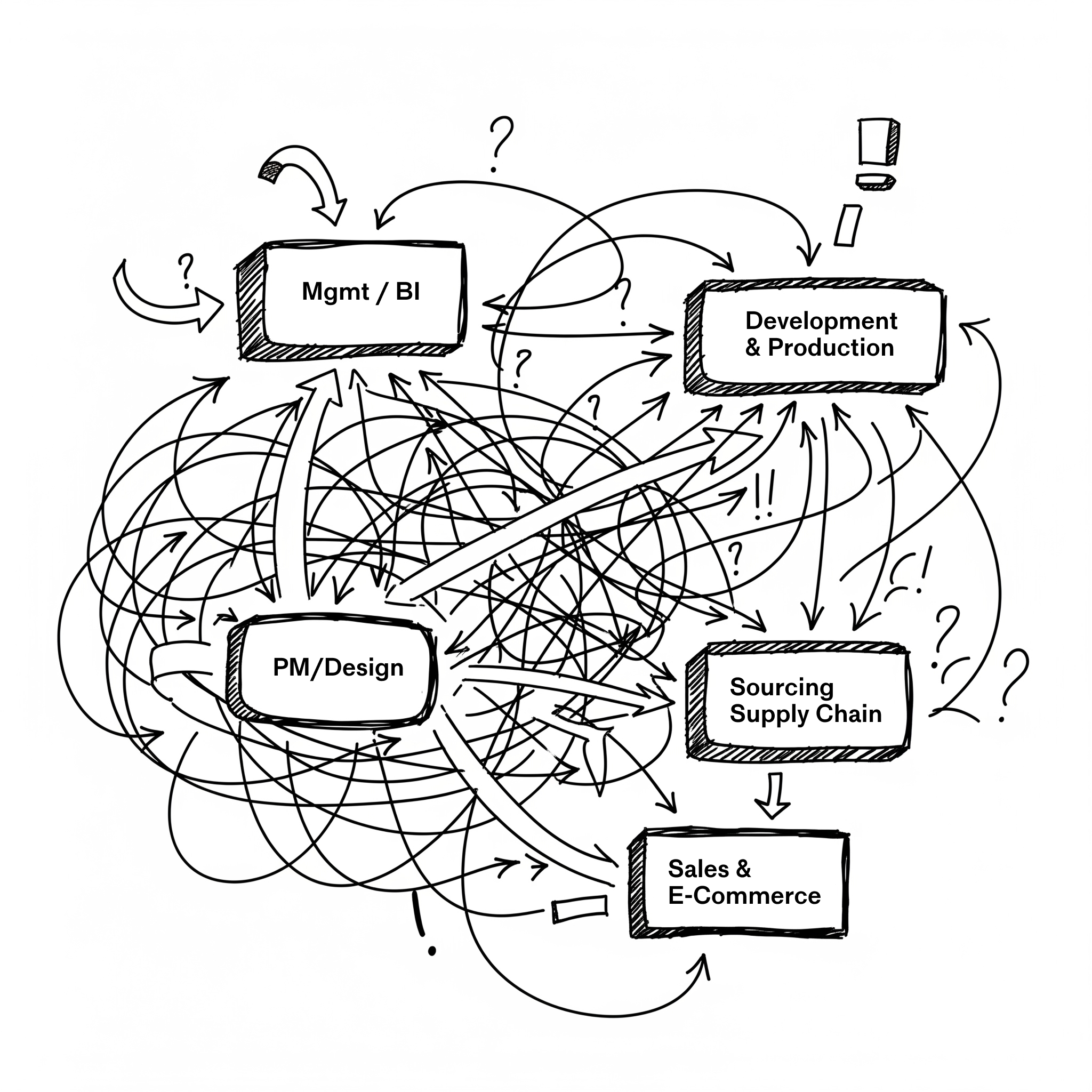
Our original product development process was fragmented across multiple tools, leading to costly errors and delays.
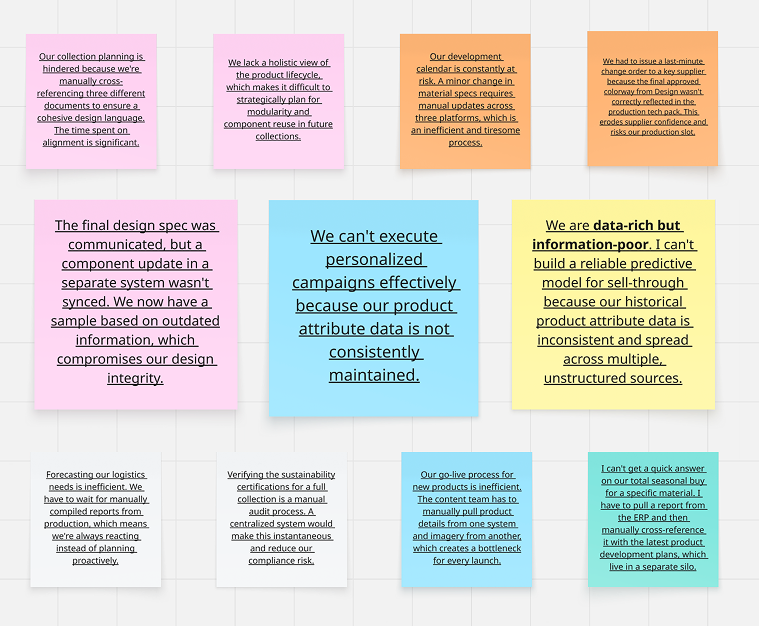
I conducted workshops with 30+ colleagues to map their workflows. Their feedback was clear: they needed a single, reliable source of information.
Cross-Functional Collaboration
This transformation required close cross-functional collaboration across design, product development, sourcing, sales, and external PLM teams. Navigating diverse stakeholder needs and driving consensus was crucial for successful implementation.
Stakeholders involved:
The Solution
The solution was a centralized PLM system, architected around the needs of our internal users. The new, designed workflows integrated previously fragmented data and automated critical tasks, creating a single source of truth for the entire product lifecycle.
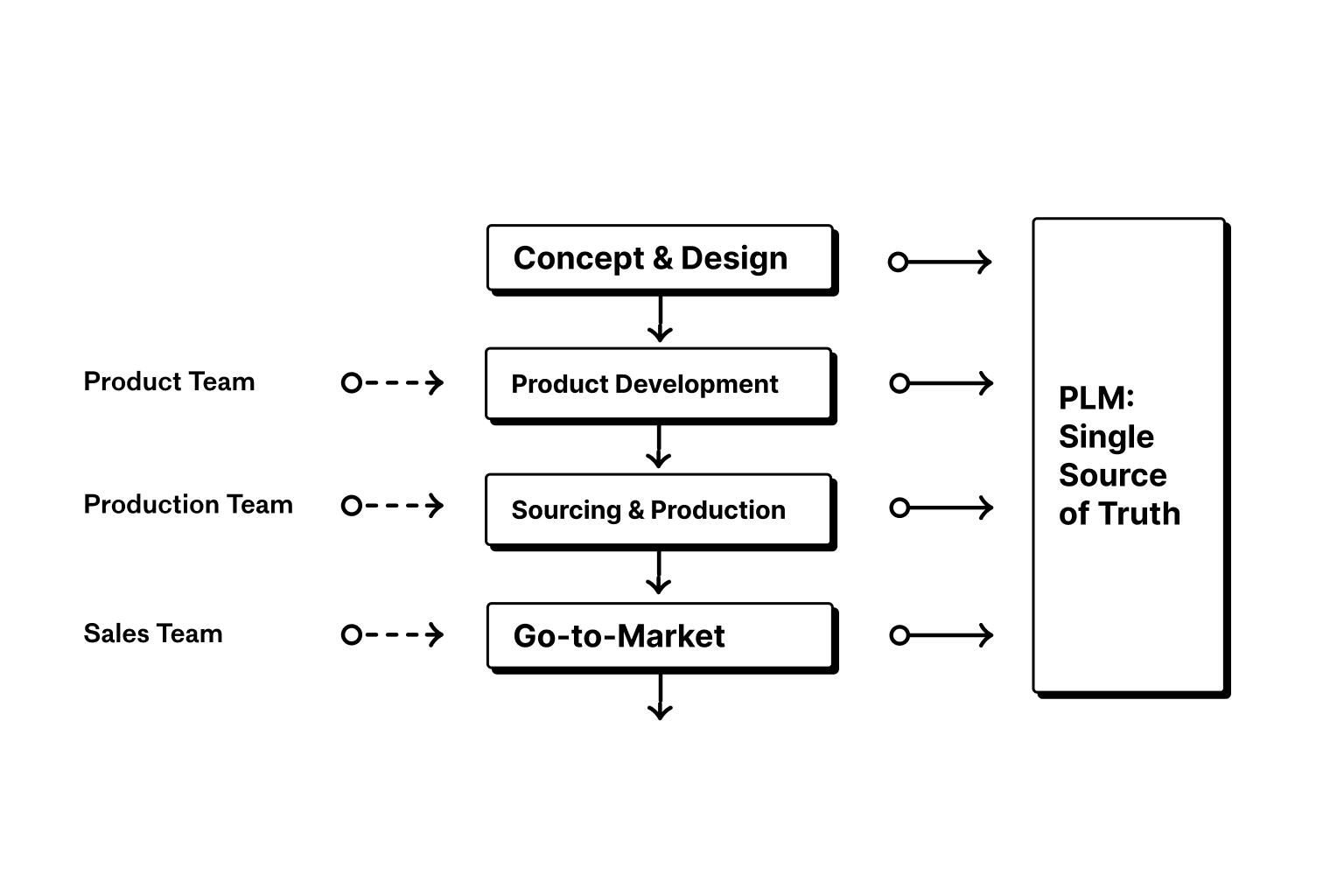
The core of my work was to design a new, centralized digital workflow that created clarity and consistency for the entire organization.
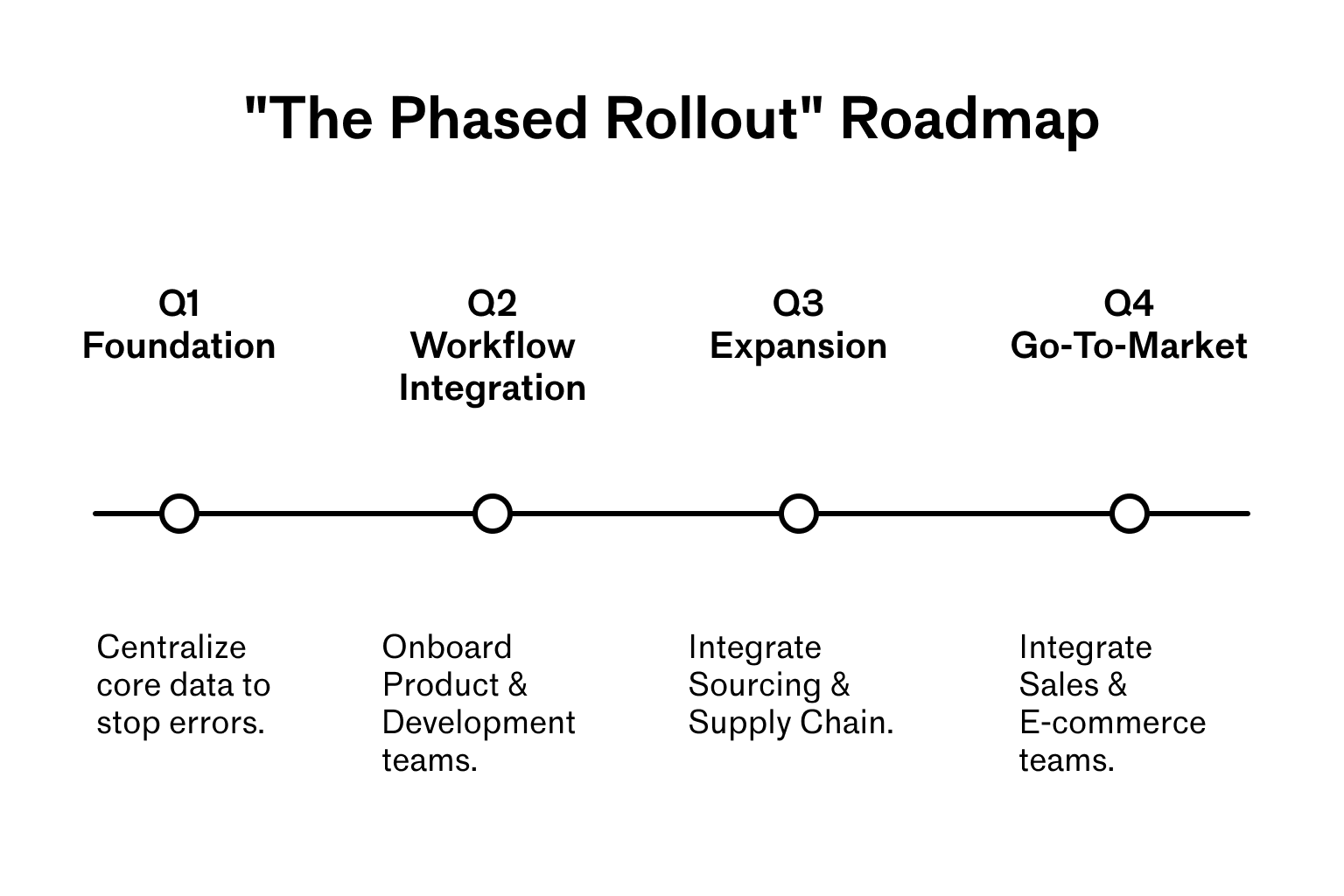
Our implementation strategy was a phased rollout designed to deliver value early and build momentum. We started with the foundational data before expanding to core creative and operational teams.
Systems Approach
My approach involved seeing the entire product lifecycle as an interconnected system. By applying systematic thinking to analyze bottlenecks and design cohesive digital workflows, I ensured consistency and scalability. This project reinforced how strategic system design can drive significant organizational change, especially for internal user experiences.
Impact
80% Reduction in Data-Related Errors, directly cutting operational costs and increasing efficiency.
15% Improvement in Development Cycle Time, getting products to market faster.
Achieved 100% Data Transparency, enabling better strategic decisions and cross-departmental alignment.
Increased Team Efficiency & Morale by eliminating manual, spreadsheet-based workflows.
Learnings & Reflections
This project underscored the critical importance of empathy for internal users. It proved that a design-led approach, combining deep user research with strategic system design and effective change management, is the key to driving successful organizational transformation.